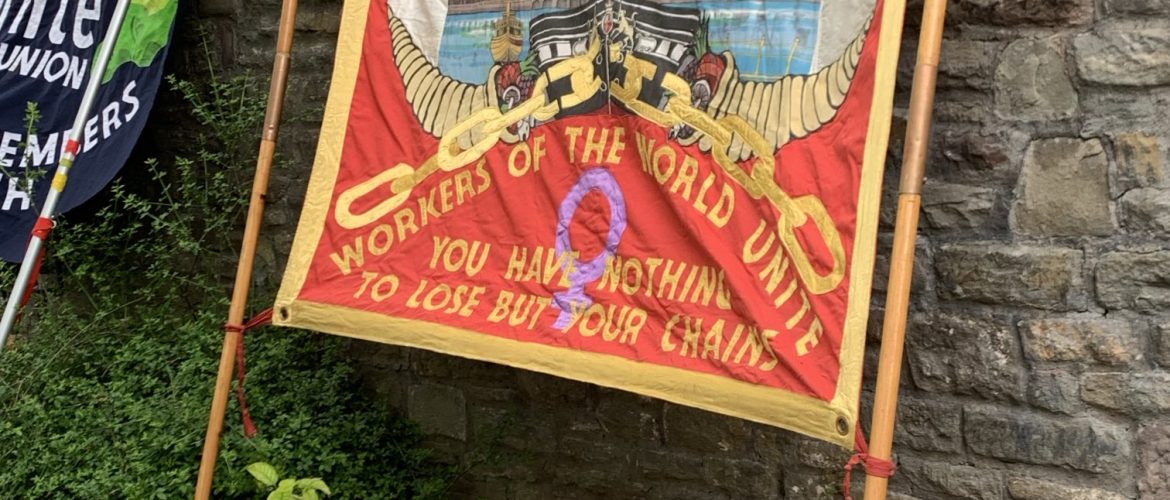
My few words as NUJ delegate to Bristol Trades Union Council at the wreath-laying in Castle Park
We would know little about what is happening in faraway places were it not for journalists, especially in areas of conflict and especially where wars are being waged supposedly in our name.
When I sat down on 14 April to prepare these few words, news came through that yet another Palestinian journalist, Islam Qannita, had been killed by the Israeli Defence Force during the so-called ceasefire in Gaza. A week later on 22 April, I learned that journalist Amal Khalil had fallen victim to yet an another targeted killing, this time in Lebanon during what was supposed to be a ceasefire.
Veteran BBC journalist John Simpson coined the phrase ‘journacide’ to describe what has been happening after four journalists were killed there in the previous 7 weeks. Lebanese journalists report that eight of their colleagues have been killed since Israel’s most recent invasion of their country.
The International Federation of Journalists estimate that 128 journalists and media workers were killed in 2025, including 56 in Palestine alone. We will be mourning these assassinations at our Centenary Congress in Paris next week. And we will be renewing calls for protection of journalists and an end to the impunity enjoyed by those who seek to eradicate press freedom.
Our colleagues around the world lose their lives at an average of 91 a year. A shroud of impunity is draped over every death. Rarely do their killers face justice. It is now a quarter of a century since Sunday World Reporter and NUJ member Martin O’Hagan was gunned down by the Loyalist Volunteer Force in Lurgan. No-one has yet been convicted of his assassination.
Last year Palestine, Mexico and Sudan were the most dangerous places to work. The killers were the Israeli Defence Force, drug cartels and the Russian Army. Meanwhile more than 500 journalists languished in jail for their pains, with China the worst culprit. All the journalists I once worked with in Belarus are now either in jail or in exile.
Thibaut Bruttin, Director General of Reporters without Borders has said it all: ‘As key witnesses to history, journalists have gradually become collateral victims, inconvenient observers, bargaining chips, pawns in diplomatic games, men and women to be eliminated. Let us be wary of false notions about reporters: no one gives their life for journalism — it is taken from them. Journalists do not just die — they are killed.’
And while we are remembering those killed working under fire, I cannot ignore all the health workers and first responders who have been killed in Palestine, the West Bank and Lebanon. It is particularly egregious that so many have been deliberately targeted specifically because they were carrying out their humanitarian duty.
I would like to end by recommending a short TV programme. Try to watch it online. It is called The invisible victims: Why workplace deaths persist in France. This 12-minute France in Focus package was made by Natacha Vesnitch, Jonathan Walsh and Cècile Khindria for TV station France 24.
France is ranked 6th among the world’s worst offenders for workplace deaths. Astonishingly an average of 2 workers a day are killed in France; 700+ so far this year. More that 1,000 died in 2024!
Meanwhile there are 300+ vacancies among Safety Officers in France who can shut down sites and issue on-the-spot fines. Small wonder relatives’ support groups that have been set up, and a book has been produced telling the victims’ stories. I have never seen anything like it on British TV. More’s the pity.
A major concern In the NUJ at present are physical assaults on journalists, and online abuse including death threats, threats of rape and other forms of intimidation. Such abuse has particularly affected women members in our South West Branch. As others have reminded us today, the impact of such abuse on a person’s mental health can effectively prevent them from being able to do their jobs.
We all still have much to do to protect our fellow workers and hold their abusers to account.
